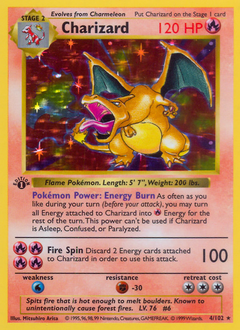





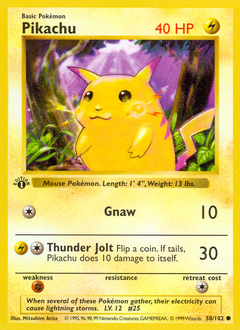


How to Spot a Fake Pokémon Card: 8 Tests You Can Do at Home
Pokémon cards are among the most counterfeited collectibles in the world today. As prices rise, so does the supply of fakes — and while a few years ago a counterfeit could be spotted at first glance, today there are copies that even experienced collectors hesitate over. The good news: you can detect most of them at home without any special equipment. All you need is a phone with a flashlight, one card you know is genuine, and a few minutes.

1. Price and Origin — the First Test Before Even Checking the Card
Most counterfeits are revealed not by the card itself, but by the offer. A pack of "50 GX, V, and VMAX cards for €15," a Charizard for a third of market price, or complete sets without a single common card — these are classic red flags. In real booster packs, the vast majority of cards are common. Holographic and rare cards are the exception, not the rule.
Be suspicious of sellers who only send pictures from the internet, refuse to photograph the back of the card, or pressure you to pay immediately.
2. Card Back
The back side is surprisingly difficult for counterfeiters. An original has a rich, deep blue border and a subtle color gradient in the swirl around the Poké Ball. Counterfeits tend to be either too dark, veering into purple, or faded and flat with blurry details. Also check the border width — on copies, the blue frame is often noticeably wider on one side than the other.
3. Text, Font, and Symbols
Genuine cards have precisely defined typography, and counterfeiters rarely get it right. Pay attention to:
- Font — HP, attack names, and numbers often appear in the wrong typeface on fake cards, too bold, or unevenly spaced.
- Typos — "Pokemon" without diacritical marks, errors in attack names, poorly formatted text. You'll practically never find typos on a genuine card.
- Energy symbols — on copies they're often too large, off-center, or in a different shade.
- Nonsensical numbers — HP or damage that doesn't exist on any real card, or an attack with no energy cost at all.
4. Light Test
Shine your phone's flashlight through the back of the card. Genuine cards have a dark layer in the center, so they let through very little diffused light. Many counterfeits are printed on ordinary cardstock and transmit significantly more light — sometimes you can even see the shape of your finger through them.

Always perform this test next to a genuine original from the same era. Different editions transmit light slightly differently, and the better copies can pass this test, so it alone isn't proof. It's one piece of the puzzle.
5. Card Edge
Look at the card from the side — ideally through a magnifying glass or with your phone camera zoomed in. On most English cards, you'll see a thin dark line in the center of the edge. It's the same layer that blocks light. Counterfeits usually lack this and the edge is entirely white or gray. Japanese cards are made differently, so compare them only with other Japanese cards.
Online you'll often see advice to tear the card open and look inside. It works — but you'll destroy the card. This only makes sense for a card you're already almost certain is worthless.
6. Thickness and Surface
Hold the suspicious card and an original between your fingers. Counterfeits tend to feel noticeably thinner and more flexible, or conversely, stiff as cardboard. They often have a different surface too: too glossy, as if laminated, or completely matte and rough. Don't unnecessarily bend the card — you'll notice the difference without doing so and might damage the original.
7. Holo Effect and Texture
With holographic cards, watch where and how they shine. On an original, the holo effect is only on precisely defined areas — on a classic holo card in the illustration window, on a reverse holo on the rest of the card — and it changes with the angle of light. Counterfeits often shine uniformly across the entire card, as if someone stuck a rainbow sticker on them.
Modern ultra-rare cards — full art, illustrations, gold and "rainbow" cards — also have a subtle tactile texture. You can feel grooves under your finger and see a pattern in the light. A smooth surface where there should be texture is one of the most reliable signs of a counterfeit.
8. Number, Edition Symbol, and Catalog Comparison
Each card has a number at the bottom (for example, 058/165), an edition symbol, and a row with a copyright notice. On counterfeits, these details often don't match: the number doesn't exist in that edition, the symbol belongs to a different series, or the copyright shows the wrong year.
Watch for one exception: secret rare cards have a number higher than the number of cards in the edition — for example, 205/165. This is fine and is not a sign of a counterfeit.
The quickest check is to compare the card with the official image. On TCGPlayer or PokéBeach you'll find cards in the catalog by edition and number with images — a free account is sufficient. If the illustration, text layout, or number doesn't match, something is wrong.
Quick Reference
| Original | Common Counterfeit | |
|---|---|---|
| Back | rich blue, sharp details | too dark, purplish, or faded |
| Light | lets through little diffused light | transmits significantly more |
| Edge | thin dark line in the center | entirely white or gray |
| Text | clean typography without errors | wrong font, typos, wrong symbols |
| Holo | only on specific areas | entire card like a rainbow sticker |
| Texture | full art cards are textured | smooth surface |
| Price | matches the market | suspiciously low |
Watch Out for Fake Graded Cards Too
Entire "slabs" — plastic cases with ratings from PSA, CGC, or BGS — are also counterfeited. Inside there might be a fake card or an original with a made-up grade. Each case has a certification number that you can verify on the company's website: the card and grade must match, and for newer items you'll also see a photo. Pay attention to the label and hologram too — font, colors, and alignment. More about grading can be found in the article What is card grading and when is it worth it.
How to Avoid Counterfeits When Buying
- Ask for close-up photos — front, back, and edge detail, ideally with a piece of paper with your name and date. For an expensive card, also a short video of how it shines when moved.
- Check the seller — their history, ratings, and whether there's a real person behind the account. On collector sites you can often see links to their other profiles before you buy.
- Meet in person for large amounts — check the card in hand before you pay.
- Don't pay with unprotected methods — for example, PayPal "friends and family" when buying from a stranger. If something goes wrong, you have no recourse.
If you're buying sealed products, also read the article How to Spot a Fake Pokémon Booster Box vs. Authentic and general guidelines in the article How to Safely Buy and Sell Collectible Cards Online.
You Received a Counterfeit Card. What Now?
- Document everything — photos of the card and packaging, the listing, conversation, and proof of payment. Don't delete anything.
- Contact the seller and request a refund in writing. Even an honest seller might have unknowingly purchased the card as genuine.
- Use payment protection — open a dispute on PayPal, or dispute the transaction through your bank if you paid by card. Both have time limits, so don't delay.
- Report the seller — with a Report button directly in the listing, with the reason "Counterfeit or resealed product." Offering counterfeits is prohibited.
- For larger amounts or obvious fraud, file a police report.
Is Selling Counterfeit Cards Illegal?
Owning a counterfeit card is not illegal — many people have them as toys for children or as "proxies" for playing. The problem arises when selling. Whoever sells a counterfeit as genuine deceives the buyer, and for larger sums this constitutes fraud under criminal law. Selling imitations with someone else's trademark could also violate their intellectual property rights.
If you have a fake card, don't sell it — not even cheaply or with a note. The next owner might pass it on as genuine.